Jewellery Making Tools for Beginners | Australia Beads
Beginner's Complete Guide · 2026

Jewellery
Making Tools
for Beginners

Everything you need to know before you buy your first set of pliers — from Australia's original online bead store, trusted by over 80,000 makers since 1998.
By Australia Beads Est. 1998 12 min read Updated 2026
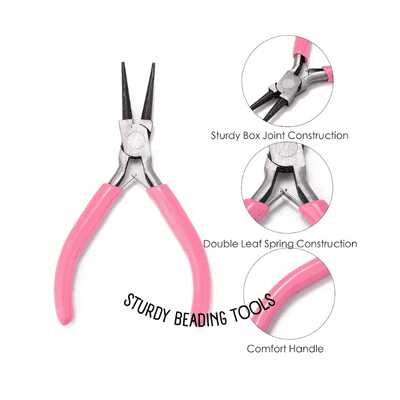
Jewellery making tools — round-nose pliers, wire cutters, and crimping pliers for beginners

Starting out in jewellery making is one of the most rewarding creative journeys you can take — but with so many tools on the market, it's easy to feel overwhelmed before you begin.

This guide draws on over 25 years of experience supplying Australian jewellery makers — from complete beginners to professional designers. We'll walk you through exactly which tools to buy first, which to save for later, and how to avoid the common mistakes that cost beginners time and money. Every tool listed is either available in our Melbourne-stocked store or can be requested directly.

25+

Years serving
Australian makers

Est. 1998 · 80,000+ customers

01

The Essential Three

Every beginner needs these before anything else

Round-Nose Pliers
★ Essential

The most-used tool in any jeweller's kit. Round-nose pliers have tapered, conical jaws that let you create smooth, consistent loops in wire — essential for making ear wires, connecting links, wrapped loops, and attaching charms. Without these, wire work is nearly impossible.

Position your wire at the same point on the jaws each time to create loops of consistent size.
Flush Wire Cutters
★ Essential

A sharp pair of flush wire cutters makes clean, flat cuts close to the wire — leaving no rough "pinch" that could scratch the wearer. These work with beading wire (tigertail), head pins, eye pins, and most standard jewellery wires. Do not use standard flush cutters on memory wire, which requires its own heavy-duty cutter.

Always cut away from your face and hold the wire end to prevent it flying loose.
Crimping Pliers
★ Essential

Crimping pliers are used to secure crimp beads and crimp tubes onto beading wire — finishing your necklaces and bracelets with a neat, professional clasp connection. They have two channels: one to fold the crimp into a C-shape, and one to round it back into a neat cylinder. Far superior to simply squashing crimps flat with regular pliers.

Use micro-crimping pliers for delicate designs with 0.35mm beading wire.

Why quality tools matter for beginners

It's tempting to start with the cheapest tools available, but poor-quality pliers will frustrate you before you've finished your first bracelet. Jaw misalignment, rough edges, and weak springs make wire work inconsistent and tiring.

At Australia Beads, we stock tools that offer the right balance of affordability and quality for beginners — tools that will serve you well as your skills grow, rather than tools you'll need to replace after a month.

1998Est. by Melworks Beads
80K+Happy customers
6,000+Products in stock
02

Highly Recommended Next Steps

Expand your toolkit as your skills and projects grow

Flat-Nose Pliers
Recommended

Flat-nose pliers have smooth, flat jaws perfect for gripping wire, opening and closing jump rings, and bending sharp 90° angles. They are the ideal "second plier" — hold your work steady with flat-nose in one hand while manipulating with round-nose in the other.

Never use serrated jaw pliers on soft wire — they leave marks. Choose smooth-jaw flat-nose for a clean finish.
Chain-Nose Pliers
Recommended

Chain-nose pliers taper to a fine, flat point — ideal for reaching into tight spaces, gripping small jump rings, and working with fine chain. They're the workhorse of precision jewellery work. Many intermediate makers find themselves using chain-nose more than any other plier.

Two pairs of chain-nose pliers are the classic tool combination for opening and closing jump rings without distorting the round shape.
Bead Design Mat
Recommended

A non-slip bead mat might not look exciting, but it prevents beads rolling away and lets you lay out your design before stringing — saving you from constantly chasing runaway seed beads across your desk. The textured surface grips beads so they stay exactly where you put them.

Use a bead mat in a neutral grey or white to accurately see your bead colours before committing to a design.
Beading Needles
Recommended

If you're working with seed beads, peyote stitch, or any loom beading, a quality beading needle is non-negotiable. Beading needles are finer and more flexible than standard sewing needles, able to pass through the tiny holes in seed beads multiple times without bending or breaking the bead.

Size 10 or 12 needles work for most seed bead projects. Keep spares — they do bend.
03

Specialist Tools — Level Up

Tools that open up whole new jewellery-making techniques

Memory Wire Cutters
Specialist

Memory wire is hardened steel wire that holds its coiled shape — making beautiful stacking bracelets and necklaces with no clasps needed. However, this hardness will destroy regular flush cutters instantly. Heavy-duty memory wire cutters (end-nippers or heavy-duty diagonal cutters) are specifically designed for this job.

Never use your regular wire cutters on memory wire — even once will damage the blades permanently.
1-Step Looper ("Plooper")
Specialist

The 1-Step Looper by Beadsmith is a game-changing tool that simultaneously bends and cuts wire to create perfectly consistent simple loops on head pins and eye pins — in a single squeeze. Ideal for making earrings at scale or for anyone who struggles to make neat loops by hand.

Available in standard and "BIG" sizes — choose based on the gauge wire you use most often.
Bead Knotting Tool / Awl
Specialist

Traditional knotted pearl necklaces use a knot between each bead to protect them and create beautiful drape. A knotting tool or fine awl helps you position each knot precisely against the bead before tightening — a technique that's nearly impossible to do neatly with fingers alone.

A twisted wire needle threader makes silk cord threading much faster when knotting with very fine cord.
Thread Zap II
Specialist

The Thread Zap is a battery-powered pen tool with a heated metal tip that melts and seals synthetic thread ends cleanly — perfect for finishing kumihimo braids, macramé, and any project where you want a clean, melt-sealed end rather than a knot. A favourite for Fireline and other synthetic beading threads.

Works on synthetic threads only — nylon, Fireline, C-Lon. It will not work on natural silk or cotton threads.
By Technique

Which tools do you need
for your style?

Different jewellery-making styles call for different tool combinations. Here's a quick guide to what you'll need based on what you want to make.

Bead Stringing

The most beginner-friendly technique — threading beads onto wire or cord and finishing with a clasp. Clean, satisfying, and endlessly creative.

Crimping PliersWire CuttersBead Mat

Wire Wrapping

Using wire to create ornamental wraps, cages, and bezels around stones or beads. A hugely popular technique with a beautiful organic aesthetic.

Round-NoseChain-NoseFlush Cutters

Earring Making

Making ear wires and dangle earrings requires consistent loops for a professional result. A classic beginner project that creates an instant wearable result.

Round-NoseFlat-NoseWire Cutters

Seed Bead Stitching

Peyote, herringbone, right-angle weave — stitch-based beadwork creates intricate textile-like jewellery using tiny seed beads and beading thread.

Beading NeedlesBead MatScissors

Pearl Knotting

The traditional art of knotting between each pearl creates heirloom-quality necklaces with beautiful movement and protection for precious beads.

Knotting AwlBeading NeedlesScissors

Memory Wire Jewellery

Beading onto pre-coiled memory wire creates instant stacking bracelets and necklaces that hold their shape — no clasp needed and very beginner-friendly.

Memory Wire CuttersRound-NoseFlat-Nose

The Beginner's Buying Checklist

Before you spend a single dollar, use this checklist to make sure you're buying the right things in the right order.

  • Start with the Essential Three: Round-nose pliers, flush wire cutters, crimping pliers. These cover 80% of beginner projects.
  • Buy tools before buying beads: Many beginners do it backwards — then discover they can't finish their projects without the right tools.
  • Don't buy the cheapest possible tools: The extra $10–$20 for a quality pair of pliers pays for itself within the first project in time and frustration saved.
  • Add a bead mat: Costs almost nothing, saves enormous frustration when working with seed beads or small components.
  • Match tools to your technique: If you want to do wire wrapping, prioritise round-nose and chain-nose. Seed bead stitching? Prioritise needles and a good mat.
  • Store your tools properly: A simple tool roll or pouch keeps plier jaws from knocking together and dulling.
$30–50

Starter Kit Budget

Covers the Essential Three plus a bead mat. Plenty to complete your first 10–20 projects and learn all the fundamentals of jewellery making.

$150+

Advanced Toolkit

Adds specialist tools like a 1-Step Looper, memory wire cutters, Thread Zap, and knotting tools. For those who've caught the jewellery-making bug and want to explore every technique.

Expert Answers

Frequently Asked Questions

The three most important tools for a beginner are round-nose pliers (for making wire loops), flush wire cutters (for clean cuts on wire and head pins), and crimping pliers (for neatly finishing beading wire with crimp beads). With these three tools, you can make necklaces, bracelets, and earrings using beading wire, head pins, eye pins, and clasps. A bead mat is also strongly recommended as a very low-cost addition that prevents beads rolling away.
Standard household pliers are not recommended for jewellery making. They typically have serrated jaws that will leave marks and scratches on soft wire and findings. They are also too large to work with small components like jump rings and crimp beads. Jewellery-specific pliers have smooth jaws, appropriate jaw shapes, and fine tips for precision work. The price difference is modest and the quality difference is significant.
Round-nose pliers have completely round, tapered jaws — used for bending wire into circles and loops. Chain-nose pliers have jaws that are flat on the inside and taper to a fine point — used for gripping, opening jump rings, and reaching into tight spaces. Both are essential in a complete toolkit. If you are only buying one plier to start, round-nose is the better first choice for most beginners.
You can flatten crimp beads with flat-nose pliers to create a functional finish, but dedicated crimping pliers produce a far neater, more professional result. Crimping pliers fold the crimp into a compact cylinder that sits neatly and is less likely to have sharp edges. For beginners making their first projects, flat-nose pliers on crimps will work — but upgrading to proper crimping pliers is one of the best quality improvements you can make early on.
For making earrings, you need round-nose pliers (to create loops on head pins and eye pins), flat-nose or chain-nose pliers (to open and close jump rings and ear wires), and flush wire cutters (to trim excess wire from head pins). If you make a lot of earrings, the 1-Step Looper tool by Beadsmith dramatically speeds up loop-making and creates perfectly consistent loops every time.
Absolutely. Australia Beads has a wide network of international suppliers and can source specialist tools on request. Simply use the "Tool Request" button next to any out-of-stock tool, or contact us at [email protected] with the tool name and any relevant details. We'll get back to you with availability and pricing as soon as possible.

Ready to start making
beautiful jewellery?

Browse our Melbourne-stocked range of beading tools and jewellery making supplies — and if you can't find what you're looking for, just ask.

Shop All Tools
0
    0
    Your Cart
    Your cart is emptyReturn to Shop
    Go to Top