The Complete Beginner's Guide to
Buying Beads in Australia
Everything you need to know before you buy — bead types, tools, stringing materials, and exactly what to put in your cart first.
If you've just discovered jewellery making and you're staring at a screen full of beads wondering where to start — this guide is for you. After 25 years of helping Australians find their first bag of beads, we know the most common mistake beginners make: buying the wrong things first. This guide will make sure you don't do that.
We'll walk you through every bead type, what tools you actually need, how to choose your stringing material, and exactly how many beads to buy for a bracelet or necklace. By the end, you'll know exactly what to add to your cart — and what to leave for later.
Understanding the Different Types of Beads
Walking into the bead world for the first time can feel overwhelming. There are thousands of bead types and tens of thousands of individual products available. The good news? You don't need to know them all — just the main categories and what each is used for.
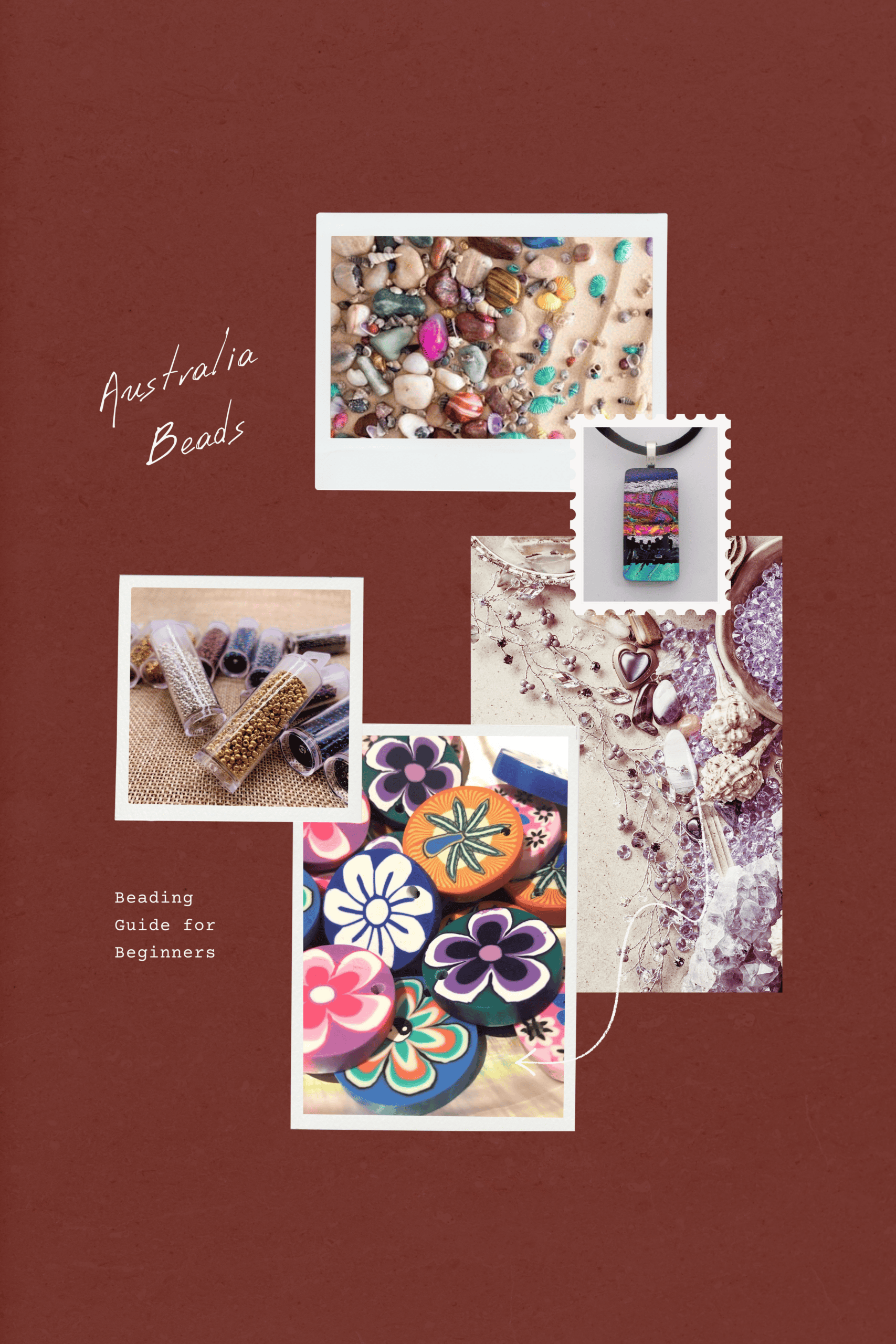
A selection of bead types — glass rounds, seed beads, crystal beads, and gemstone beads.
Glass Beads
The most versatile category. Available in every shape, size, and finish — from simple rounds to Czech fire-polished and lampwork styles. Heavier than acrylic with beautiful depth of colour.
Best for: necklaces, bracelets, earrings Shop Glass BeadsSeed Beads
Tiny uniform glass beads (1–4mm) for bead weaving, embroidery, and intricate patterns. Miyuki and Toho are the gold-standard brands for consistency and colour range.
Best for: weaving, peyote stitch, bracelets Shop Seed BeadsGemstone Beads
Natural semi-precious stones shaped into beads — amethyst, turquoise, jasper, moonstone and more. Every strand is unique. Adds a premium, natural quality no synthetic bead can replicate.
Best for: premium jewellery, gift pieces Shop Gemstone BeadsCrystal Beads
Highly faceted glass that catches and reflects light. Swarovski and Preciosa are the most respected brands. Adds serious sparkle — popular for bridal and evening jewellery.
Best for: bridal, earrings, formal pieces Shop Crystal BeadsAcrylic Beads
Lightweight plastic beads in every shape and colour. Much cheaper than glass — ideal for large statement pieces, children's jewellery, and fashion designs where weight matters.
Best for: kids' projects, statement pieces Shop Acrylic BeadsPearl & Shell Beads
Freshwater pearls, glass pearls, and shell beads each offer a different pearl aesthetic. Freshwater pearls are real — and more affordable than most people expect.
Best for: classic necklaces, bridal designs Shop Pearl BeadsMetal Beads
Brass, copper, sterling silver, or silver-plated beads used as spacers and accents. Even a few well-placed metal beads can elevate an otherwise simple piece considerably.
Best for: spacers, mixed metal designs Shop Metal BeadsArtisan & Lampwork Beads
Handmade glass beads crafted individually — every bead is unique. Our Kashmiri and Indonesian artisan beads are imported directly and won't be found in chain craft stores.
Best for: focal beads, statement pieces Shop Artisan BeadsThe Best Beads to Start With as a Beginner
Our recommendation after 25 years helping beginners: start with glass round beads between 6mm and 10mm. Here's why they're the ideal first bead:
- Large enough to thread without needing a beading needle
- Heavy enough to drape and hang nicely when worn
- Affordable — experimenting and making mistakes isn't costly
- Available in every colour imaginable
- Compatible with elastic cord, beading wire, or nylon thread
If you'd rather skip the decision-making, our Rose Beading Starter Kit includes over 1,600 beads across 9 colour options plus storage containers and needles — everything chosen to work together. Open it and start immediately.
Once you've made two or three pieces with larger glass beads and understand how to crimp, loop, and clasp, you can move confidently into gemstones, seed beads, and crystal work. We specifically advise against starting with seed beads — they require a beading needle and more technique, and most beginners find them frustrating before they've got the basics down.
How Bead Sizes Work — and Why It Matters
Most beads are measured in millimetres — 4mm, 6mm, 8mm, 10mm, 12mm. Simple enough. Seed beads use a different, counterintuitive system called "aught" sizes, written as 6/0, 8/0, 11/0, or 15/0. The key rule: the larger the number, the smaller the bead.
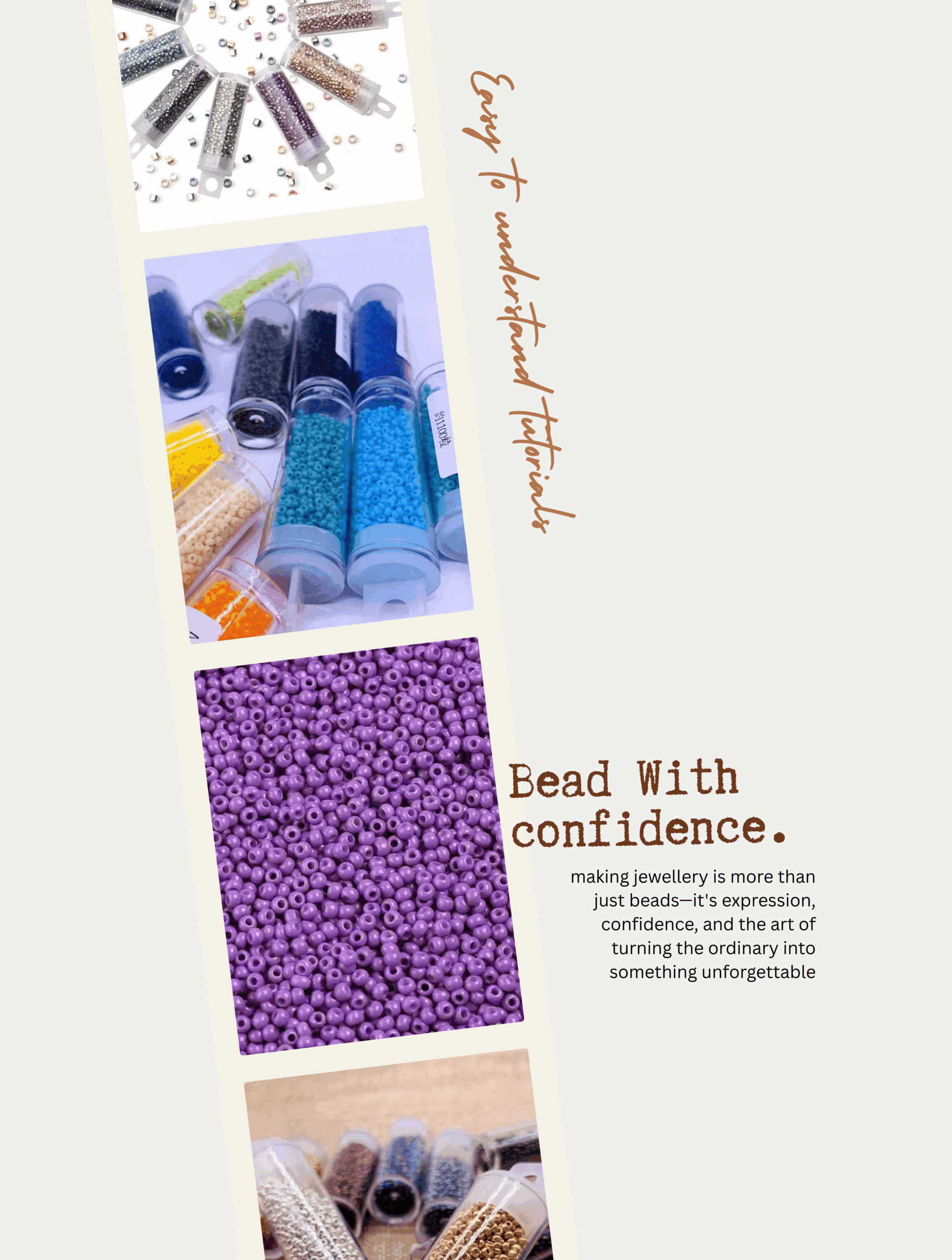
Seed bead sizes — beginners should start with 8/0 or 6/0.
| Size | Approx. Diameter | Best For | Beginner? |
|---|---|---|---|
| 6/0 | 3.3–4mm | Simple stringing, children's projects | ✅ Easiest |
| 8/0 | 2.5–3mm | Bracelets, necklaces, basic weaving | ✅ Recommended |
| 11/0 | 1.8–2mm | Peyote stitch, herringbone, loom work | ⚠️ Intermediate |
| 15/0 | 1.3–1.5mm | Fine detail work, embroidery | ❌ Advanced |
Always check the millimetre measurement in the product description rather than relying on photos alone. Beads consistently appear larger in product photography than in real life — this is the most common surprise for first-time buyers.
Choosing Your Stringing Material
The material you string your beads on affects the drape, durability, and difficulty of the finished piece. This is one of the most overlooked decisions beginners make.
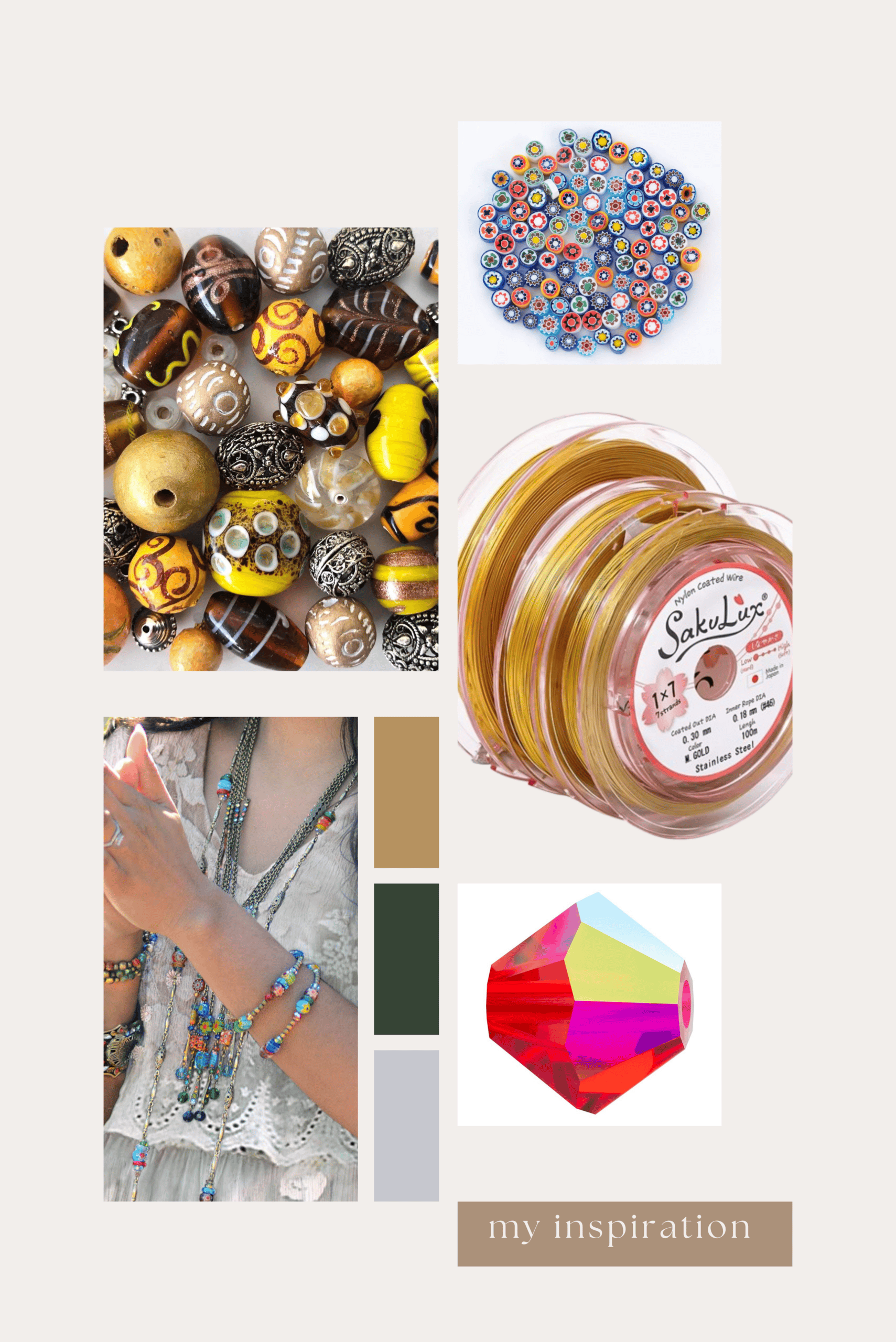
Main stringing options — elastic cord, beading wire, silk thread.
Beading Wire
⭐ Best for beginnersFlexible steel wire coated in nylon. Strong, no needle needed, holds shape well. Finish with crimp beads. Ideal for necklaces and structured bracelets.
Elastic Cord
⭐ Easiest of allThread beads, tie a surgeon's knot, add a drop of jewellery glue, trim. No clasp needed. Perfect for stretch bracelets. Use 1mm thickness.
Nylon Thread
IntermediateUsed with a beading needle for seed bead weaving. FireLine and Nymo are popular brands. Save this until basic beading feels comfortable.
Silk Thread
Intermediate — PearlsTraditional material for pearl necklaces, knotted between each bead. Beautiful but requires a specific technique. Not a beginner starting point.
Memory Wire
Easy — no claspPre-formed coil that holds its shape without a clasp. Great for stacking bracelets. Requires memory wire cutters — never use standard cutters.
Craft Wire
IntermediateFor wire-wrapping, making ear wires, and wrapped loops. 20–22 gauge for structural work, 24–26 for wrapping. A great skill to add later.
Browse all stringing materials and jewellery making supplies →
Essential Tools You Actually Need
Beginners either overspend on tools they don't need yet, or underspend on cheap tools that make the work unnecessarily difficult. Here's exactly what to buy.
The essential beginner tool set.
-
01
Chain Nose Pliers
Your most-used tool. Flat inside with a tapered tip — perfect for opening jump rings, flattening crimps, and holding small components. Get smooth (not serrated) jaws or they'll scratch your wire.
-
02
Round Nose Pliers
Fully round, tapered jaws for forming neat loops in wire. Essential for earring drops on head pins and chain-style connections. You'll use these constantly once you start wire work.
-
03
Wire Cutters (Flush Cutters)
Give a clean flat cut right against your bead. Don't use hardware-store wire cutters — they leave a sharp angled burr that scratches skin and catches on clothing.
-
04
Crimping Pliers
Folds and compresses crimp beads so they grip your beading wire securely. This is how you attach clasps neatly to necklaces and bracelets. A medium pair handles most wire gauges.
-
05
Bead Mat
A velvet or foam mat that stops beads rolling away. This sounds minor until you've spent twenty minutes chasing seed beads across the floor. A bead board with measurement channels is the upgrade when you're ready.
Budget pliers from general craft chains often have poor tension and rough jaws that mark your wire. Mid-grade tools from a dedicated beading supplier will last years and make work noticeably easier. The Beadsmith brand — available at Australia Beads — is the choice of most professional beading teachers in Australia.
How Many Beads Do You Need?
This is the question we're asked most often. The answer depends on bead size and the finished length you want. Use this table as your reference:
| Bead Size | Bracelet (18cm) | Necklace (45cm) | Necklace (60cm) |
|---|---|---|---|
| 4mm | ~45 beads | ~113 beads | ~150 beads |
| 6mm | ~30 beads | ~75 beads | ~100 beads |
| 8mm | ~23 beads | ~56 beads | ~75 beads |
| 10mm | ~18 beads | ~45 beads | ~60 beads |
| 12mm | ~15 beads | ~38 beads | ~50 beads |
| Seed 8/0 (~3mm) | ~60 beads | ~150 beads | ~200 beads |
Beads get dropped, designs change mid-project, and having spares means you're not stuck waiting on a reorder to finish a piece. On inexpensive beads this adds almost nothing to your cost. On gemstones it's still worth it.
Findings — The Bits That Finish Your Jewellery
Findings are the functional metal components that turn a string of beads into a wearable piece. Beginners frequently forget these and find themselves with a beautiful strand they can't close or wear. Don't let that be you.
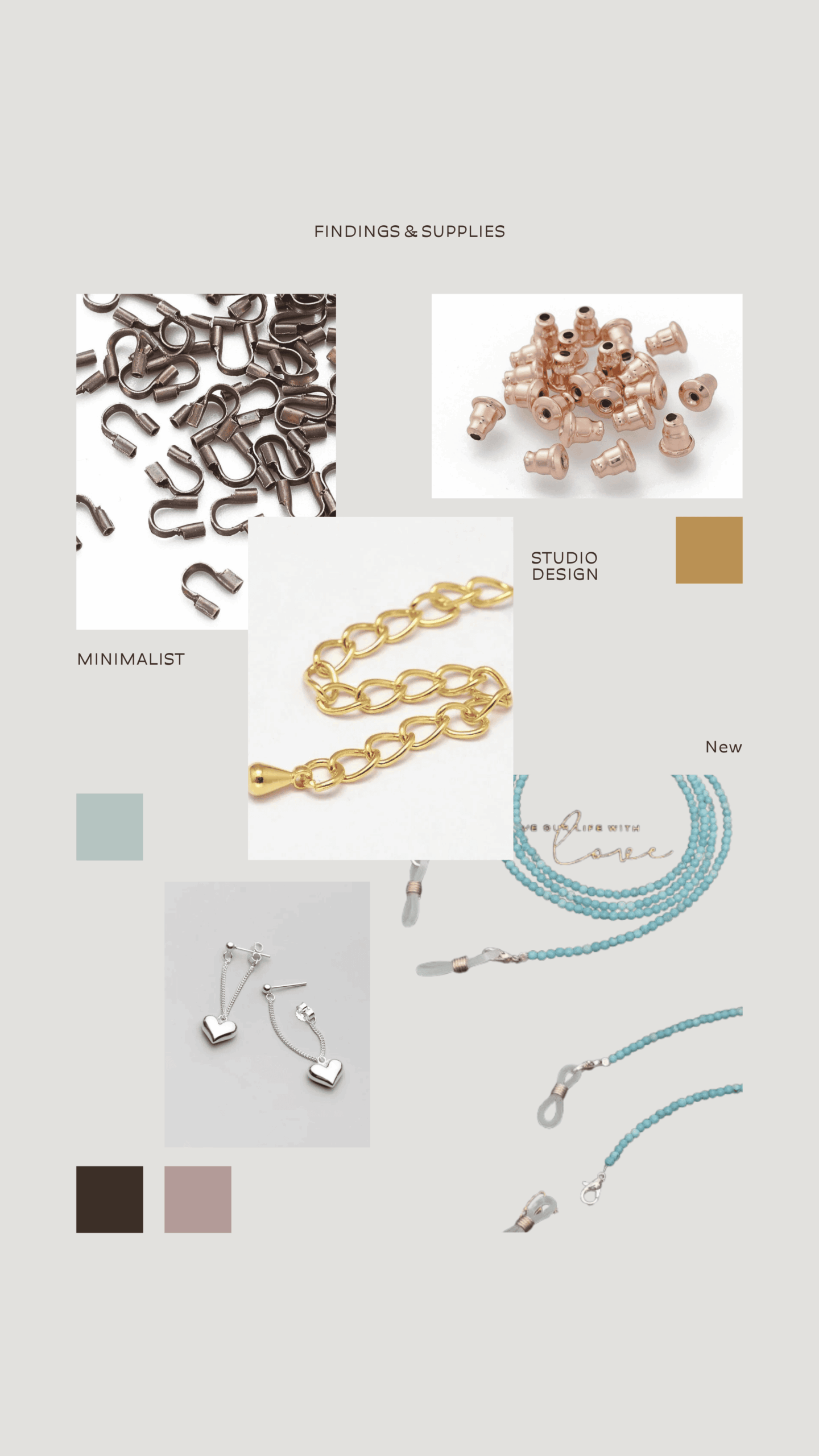
Essential findings: lobster clasps, jump rings, crimp beads, head pins, and earring hooks.
The findings every beginner needs
- Crimp beads or tubes — small metal tubes crushed with crimping pliers to hold beading wire in place. Buy a pack of 100 — inexpensive and you'll use them constantly.
- Lobster clasps — the most common necklace and bracelet closure. Easy to use, secure, and available in gold, silver, and rose gold tones.
- Jump rings — small open metal rings that connect clasps, link components, and attach charms. Get a selection of 4mm, 6mm, and 8mm sizes.
- Earring hooks (shepherd hooks) — the base for hanging earring drops. Sterling silver or gold-filled hooks are best for anyone with metal sensitivities.
- Head pins and eye pins — short wire pins for making bead drops. Thread a bead, form a loop with round nose pliers, attach to an earring hook — that's the basic earring formula.
Your Complete Beginner's Shopping List
Here's exactly what we'd put in a first-time buyer's cart. This setup covers bracelets, necklaces, and simple earrings — enough variety to develop your style over several months without needing anything else.
The Beginner's Starter Kit
- Glass round beads, 6–8mm, in 2–3 colours you love — your main bead for the first few projects
- Seed beads, size 8/0, one colour — as accent beads between larger beads
- Assorted gemstone bead pack — one pack to experiment with natural stone
- Elastic cord, 1mm — for your first stretch bracelets
- Beading wire (tigertail), 0.45mm — for necklaces and structured bracelets
- Chain nose pliers
- Round nose pliers
- Flush wire cutters
- Crimping pliers
- Bead mat or bead board
Our Rose Beading Starter Kit includes over 1,600 beads across 9 colour options plus storage and needles — everything curated to work together. Open it and start immediately.
Ready to start beading?
Australia Beads has been supplying Australian jewellery makers since 1998. Over 7,000 bead varieties, shipped Australia-wide via Australia Post.