

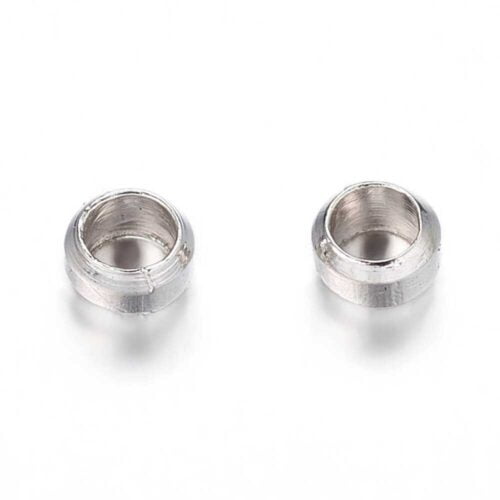
Antique bronze tube crimps measure 2.2mm long with 1.4mm holes, securing beading wire without the bulk of round crimps.
50 Tube Crimps Bronze Jewelry Beads – (2.2mmX2mm)
$3.00
53 in stock
53 in stock
Description
Bronze Tube Crimps
How do you finish a strand of glass beads without leaving visible metal bumps that interrupt the flow? These cylindrical bronze tube crimps sit closer to the wire than their rounded cousins, creating near-invisible termination points on necklaces and bracelets where the focus belongs on the beads themselves. The antique bronze finish disappears into shadow when positioned correctly, while the 1.4mm hole accommodates both 0.018″ and 0.019″ nylon-coated beading wire with enough room for a double pass through standard crimp technique. Each pack contains fifty pieces that measure 2.2mm in length and 2mm across, sized to flatten neatly without cracking when you apply crimping pliers at the correct angle.
- Antique bronze metal alloy, nickel and lead-free composition
- Tubular shape: 2.2mm length × 2mm diameter with 1.4mm internal hole
- Designed for 2mm crimp beads compatibility with standard jewellery pliers
- Fifty pieces per pack for multiple projects
- Works with soft flex wire, tigertail, and nylon-coated beading cables
Use these when stringing garnet or smoky quartz chips where warm-toned metal crimps jewellery components won’t compete visually with the gemstones’ natural depth. The tubular profile means you can position them horizontally along gemstone beads strands without the crimp rolling or shifting under wear, particularly useful when building floating bead designs where each crimp holds a spacer bead in exact placement. Thread one onto nylon wire, pass through a clamshell bead tip, loop back through the crimp, then compress with the notched section of your pliers—the tube collapses into a flat oval that grips without cutting the cable’s nylon coating.
These work reliably with 0.45mm diameter jewellery making supplies wire commonly sold for stringing projects, though you’ll want to test your specific wire gauge first by threading it twice through the hole to confirm clearance. Store them in a small compartment box rather than loose in a drawer—at this size they’re easy to lose, and you’ll appreciate having them sorted when you’re mid-project and need to grab three quickly. The bronze tone photographs slightly warmer than it appears in hand, reading almost copper under direct sunlight but settling into true bronze in indoor lighting alongside metal beads in similar antiqued finishes.








Reviews
There are no reviews yet.